Thursday, February 2, 2017

Pioneer Women in Science


History is full of stories of men.  Powerful men; warriors, kings, champions, knights, explorers, and emperors.  The stories of women are so few - Catherine the Great, Hatshepsut, Elizabeth I, Cleopatra.

Male Scientists, leaders in their fields, and discoverers are plentiful as well.  In the man's world of science, for centuries women were either shut out, if they were allowed in it was hidden, or they masked their identities behind their husband.

Even in the 1950's, when the race was on to discover the very essence of what made life possible, the secret of DNA, women were looked down up; Watson and Crick were given all the credit for discovering the structure of DNA while many have never heard the name Rosalind Franklin.  Sure we know some names - Marie Curie being one of the most well-known, followed by Jane Goodall, but so many are relegated to the background, to obscurity.

Here are a few of Canada's Pioneers in the field of science.

Dr. Ernest Rutherford is a staple of chemistry textbooks, from high school through college level.  His gold foil experiments led to our understanding of the behavior of atoms.  Yet it wasn't until I was researching for this post that I came across Harriet Brooks, who was Canada’s first female nuclear physicist.  She worked alongside Rutherford as well as with Marie Curie.

Everyone knows that we have a polio vaccine.  Many know that Jonas Salk's work on the polio virus led to the vaccine.  But even in a microbiology class, I was never taught about Leone Norwood Farrell, whose work made it possible to mass produce Salk's vaccine.  Without her, the vaccine wouldn't have saved near as many lives.

In the field of paleontology, of the study of long dead (but once living things - like dinosaurs) there are tons of notable men, but few women.  I learned about Mary Leakey and Mary Anning in my Dinosaurs of the Mesozoic class because they were the exceptions to the male rule.  Canada boasts a woman who pioneered a new field in paleontology - the use of microscopes to examine tiny, microscopic fossils, the kind that can be used to tell an enormous amount about the changes of a landscape over millions of years.  That scientists is Frances Wagner.

Those are just a few of the big names ... 

There are also pioneers that didn't discover big things, that didn't start a totally new field of study - but instead pushed against the "no women allowed" belief and became the first in medicine - like Maude Abbott, who was among the first group of female medical students and who later went on to do pivotal work on congenital heart disease, or Carrie M. Derick, the first woman to be appointed a full professorship at a Canadian University and who works on our understanding of heredity.

If you, or a young female you know, is interested in learning about a career in the science field check out the Society of Canadian in Science and Technology.

If you are interested in learning more about the Pioneer Women in Science in Canada, check out these following articles.  There are so many more ... this is just a sampling.


And Canada doesn't stand alone with women pioneers in science ... 

If you are interested in learning more about the Pioneer Women in Science (globally), check out these following articles.  There are so many more ... this is just a sampling.


Extraordinary Women in Science and Medicine (a former exhibit at the Glorier Club)


Wednesday, February 1, 2017

A little bit about Sprucedale, Ontario by Nancy M Bell

I thought some of you might like to learn a bit about the location where most of my story is set. Sprucedale, Ontario is a village in the Almaguin Highlands. It is located on Highway 518 12 kilometres from the Highway 11 corridor. The village is situated on the Park to Park Trail which connects Highway 11 to Highway 69 and follows the rail bed of the abandoned Parry Sound Exploratory Railway for 61 kilometers. The village was named for the formerly abundant stands of spruce and other conifers. Sprucedale is in the Municipality of McMurrich/Montieth in the Almaguin Highlands district of Parry Sound. My grandmother lived outside of the village on a farm. My mother was born on a part of the original St. George farm in a log cabin. The country is heavily treed with hard and soft wood bush, a mix of conifer and deciduous trees. Maple, oak, elm, spruce, pine and cedar.
This is the log cabin my mother was born in, still on the same farm but moved from its original location. It now serves as a sauna spa.
My grandparents, my uncle and my mother having supper on the front porch of the cabin in its original location.
The old school house my mother would have attended
The Sprucedale Train station. My great grandfather used to take cream cans into the station to be shipped to T Eaton Company in Toronto.
Fall colours. In late September and early October the Ontario bush is afire with the orange-red and gold of the maples flaming on the hills punctuated by the deep green of the conifers.
Winter snows come often and deep. In the early days it wasn't unusual to be snowbound for months at a time.
In summer the land is much kinder. Deep clear rivers and lakes invite the hot toiler in the fields to cool off. Long summer evenings where pioneers worked until the light faded completely. Although it is beautiful, it is also always testing. In late April and May the black flies swarm making life miserable for anyone who has to work outside. My grandfather used to smear oil or bear grease on the plow horses' faces and in their ears to keep them from being eaten alive. Once the weather heats up enough to kill off the black flies the mosquitoes emerge, followed by the huge deer flies and horse flies. Sand flies also come up out of the earth as the plow turns things over.
Typical bush scene.
One last photo to share with you. In front is my younger sister and myself. In the back is my grandmother Lois St George Pritchard, her sister Rotha St George Dennison, and her other sister Charlotte (Lottie) St George Hines. This was taken in Sprucedale on Aunt Lottie's front lawn around 1962. If you ever have the chance to visit Sprucedale and the surrounding area be sure to stop and enjoy the wonderful scenery. In winter snowmobilers flock to the area, as well as ice fishers. In summer, hikers and cottage goers come to enjoy the lakes and villages. Til next month, Stay well, stay happy, stay safe.

Saturday, January 28, 2017

Natural Wonders Galore

Can't get enough of the natural wonders of Canada?  Here are a few more ... (and some of the man-made ways to view them)

Mount Asgard

"An impressive mountain, made of 2015 m (6610 ft) high twin towers, can be found in Auyuittuq National Park. The name comes from Scandinavian mythology, where Asgard is the kingdom of the gods, while it is called Sivanitirutinguak by the Inuit. "


It's only fitting that a place named after the home of the Norse Gods has a spectacular view of the Northern Lights.


The Glacier Skywalk

A glacier ... and the only real way to see it and admire the awe-striking sight is from above.


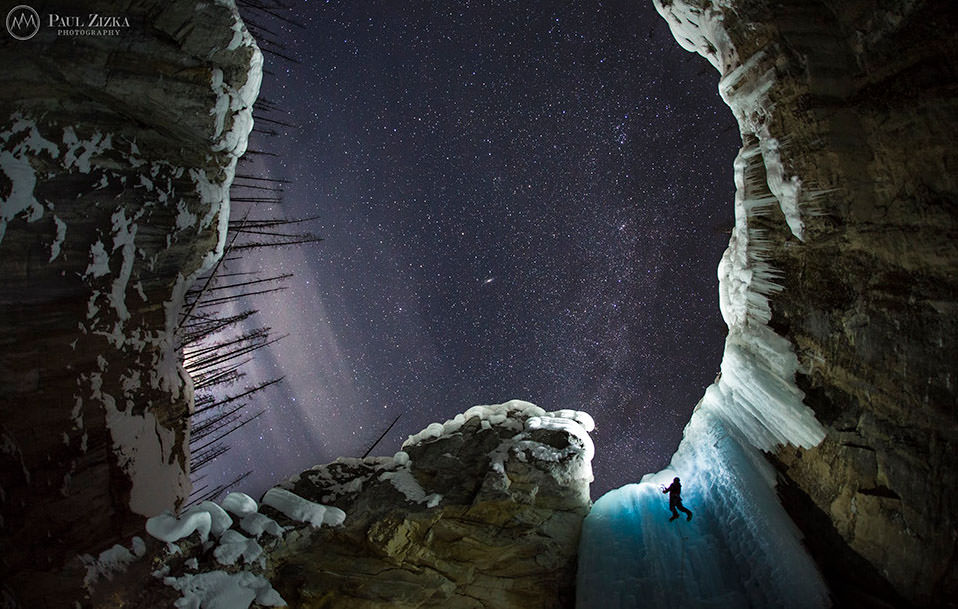
Ice Pillars and Stalactites


Capilano Suspension Bridge

A river amid a gorgeous forest and a looonnnnngggggg bridge to view it from.


Parts of the bridge are like something out the Swiss Family Robinson.  Or Star Wars in the Ewoke village.


And no list would be complete without ...

Niagra Falls


Wednesday, January 25, 2017

The Beauty of Canada by A.M. Westerling


It looks like I’m the last one posting on Canada’s beauty and I must say I have some big shoes to fill. But here goes:


When I think of Canada’s natural beauty, three things come to mind: mountains, forests and water. Lots and lots of water. Canada is listed as one of the top five countries as far as fresh water supply and you see it everywhere, in tumbling waterfalls, placid lakes, and wild rivers, which were the road of the fur traders who explored this country.

Takkakaw Falls in Yoho National Park, pictured right, is one of our regular picnic destinations.


Up and in behind Lake Louise, Alberta you'll find Moraine Lake and the Valley of the Ten Peaks. Summers are busy and visitors are taken in by bus. Unless you want to hike, of course! 

Anyway, these are a couple of my favorite pictures of the Canadian Rockies. We live an hour's drive away and we make sure to take advantage of it.


Like the U.S., Canada stretches from the Atlantic Ocean to the Pacific Ocean. We have about 1/10 the population so we are a large, sparsely populated, and, (dare I say!?) cold country. Yet nothing can beat the sweetness of a Canadian summer. When the air is velvet soft and the sky darkens from indigo to plum to ebony. We’re pretty far north so twilight lasts for hours.And what better way to enjoy a beautiful evening than being outdoors?   


 My husband and I are avid campers and our destination of choice is British Columbia. Imagine camping at night, with a cozy campfire crackling at your feet and a canopy of millions of stars overhead. 

If you’re lucky, you’ll see shooting stars, or the northern lights rippling overhead like curtains of light, or best of all, a meteor. I like to set out tea lights in the forest. 


Imagine too, the silence, occasionally broken by the sough of the wind in the tree tops or the prattle of a squirrel, annoyed because you’re infringing on its space. Or the cheerful chatter of birds: pine siskins, wood peckers, warblers, finches, chickadees, whiskey jacks, robins and jays. Listen to the soothing pitter patter of rain on the roof of the motor home, or how about starting your day not to the buzz of an alarm clock but by finding a sunny spot among the trees and enjoying the peace and tranquility with a fresh cup of coffee? 


Speaking of morning, nothing beats the fragrance of an evergreen forest unless it’s the aroma of bacon, eggs and hash browns frying outside over the camp stove. 

Actually, the only thing better than smelling bacon frying outside is eating bacon and eggs outside!  

Monday, January 23, 2017

Cover Reveal: Nova Scotia


Beauty of Canada—Northwest Territories/Great Slave Lake by Juliet Waldron

Canada—to this east coast American— is terra incognita. As a child, I visited Niagara, both sides, and Montreal, but otherwise was unfamiliar with my northern neighbor. Then my publisher, BWL, asked me to co-author a story with Canadian John Makowski (a First Nation gentleman who writes as Wisdomkeeper). I used to love Due South, and the fantasy Mountie hero of that TV show came from Nunavit. So when I was asked to choose, my impulse was “NWT.” Slowly, as John and I kicked ideas for our story around, we decided to move our story to the Great Slave Lake area. Now, I had my research cut out!


The first thing that struck me was the immensity of the lake and its surroundings. Geologically speaking, on the East, the Great Slave touches the ancient Canadian Shield, on the West, it rests upon the younger “interior platform” of the North American continent.   This affects the look of the place, the trees, the vegetation, the terrain. After being crushed by the glacier for thousands of years and then flooded by great rivers of run-off, the land is fairly flat. The dark spruce forests of the northwestern arm give way to praire. Other parts are filled with glacial pothole lakes, long stretches of muskeg, eskers, and everything you’d expect after thousands of years of icy burial and subsequent violent, watery resurrection.

This is a terrain, which, until a hundred and fifty years ago, was near primeval. The First Nation people and their furred, winged, and finned brethren had this vast landscape to themselves. Life went on just as it had for thousands of years, a nomadic cycle which followed the seasons. Sometimes there was feasting; sometimes, starvation.

The Great Slave Lake is one of the largest bodies of fresh water in the world. It’s deep, too, and cold and full of fish. These fish were the summer work of the First Nations, who both ate them and preserved them in great quantities for winter.  The Mackenzie River, which leaves the Great Slave Lake at the west end and heads north to the Bering Sea, will also be in our story, where the Fort Resolution Indian Residential School was situated. Here there are low spruce forests. In traveling north, in the general direction of Behchoko and Yellowknife you’ll find the muskeg swamps, glacier-scraped down to the bone. Bright lichens color the rocks above the peat bogs and the night sky, even in August, may flaunt the drama of a green/gold aurora. The stars, seen from here, are myriad, nothing like the hazy skies of my US backyard.

The more I learn about this part of the world, the more I would like to see it for myself, to walk the land and learn to know it.  Any time would be good—from the long darkness and ferocious cold of winter--all those radiant stars—to the summer, when everything green is in a big 100 day hurry, when the great lake thaws beneath those 20 hours of summer sun, and welcomes people to fish, boat, and swim.

Sunday, January 22, 2017

Interview with Juliet Waldron


It took some doing, but I finally managed to catch up to the extremely busy Juliet Waldron and get a few questions answered ...

Do your characters seem to hijack the story or do you feel like you have the reins of the story?

I’ve only had a two characters hijack a story, one recently in Butterfly Bride, where the heroine refused the nice hero I’d provided. The weirdest and, truthfully, life-changing experience I ever had was while writing my first novel, My Mozart. The teen heroine began to talk, and then she would not stop. She talked all night so I couldn’t sleep; she talked while I was supposed to be working, too. Eventually, to retain my sanity, I had to quit my day job because it was impossible to focus on anything but the story she HAD to tell. Nanina Gottlieb took over my life. In doing so, she forced me to take writing seriously.  

If you could spend time a character from your book whom would it be? And what would you do during that day? (PG-13 please :)

For me, it’s a toss-up between Hamilton and Mozart, but I think I’ll go with Mozart’s Wife for one particularly amazing day in the composer’s life. Constanze and I will go to the first performance, in Prague, of her husband’s famous opera, Don Giovanni. We even know the date, October 29, 1787, close to All Hallow’s Eve, and therefore perfect for a tale of the supernatural. I will be 28 years old, and dressed in ivory silk, , a Robe a la Anglaise, embroidered all over with tiny flowers—with a plumed bergere perched upon my piled curls, with matching gloves and heels, seated in a box with Constanze and the Mozart’s coterie of artistic friends. From here, we are all looking down into the candle-lit jewel-box of a theater. (By some miracle, this relic still exists, and was the venue used for the opera scenes in the movie Amadeus.) Among these writers and musicians crammed in beside us, would be the aged rake Cassanova himself, who is reputed to have helped Mozart and his writer (librettist) with the plot.  The performance ended with multiple encores, flowers raining down on the stage, and Mozart weeping, arms open to his adoring audience, declaring Mein Praguers Verstehen mich! (My Praguers understand me!) The after-party, beginning with street celebrations, were the 18th Century version of a Rave which spilled out all over the city.


What is a favorite childhood memory you can share with us?

Soaking in a hot spring on the island of Nevis with my mother. Life with mother had its ups and downs, but back in 1957 when my Hamilton mania began, she decided to take a side trip from Barbados, so I could see the place where my hero Alexander was born. The spring was beautiful—just a crevice in the rocks, surrounded by all sorts of delicate orchids and ferns. It was as if we’d entered fairy land. And because almost no one traveled to Nevis in those days, we were alone there with a slight breeze, the perfume of the flowers, the rustling palms, and the meditative healing of hot water.   


What genres do you like to read?

I read a lot of non-fiction because I mostly write historicals because I am always searching for inspiration. I really enjoy light science writing, too, and just finished a really fun book called “My Beloved Brontosaurus” by Brian Switek, which was a break from my usual fare. I am a long-time reader of S/F from the days of pulp onward, although I’ve never completed anything I’ve begun in the genre. Obviously, I read a lot of historical novels in many time periods, favoring writers like Sharon Penman, Cecelia Holland and old timer Margaret Irwin. I also read literary fiction, (Margaret Atwood, Jamaica Kincaid, etc.) which I wish I had the chops to write.    


Of all the characters you have created, which is your favorite and why?

My favorite character is Rose, from Roan Rose.  She’s flawed, sometimes weak, sometimes full of spite, but she makes hard choices, and then braves the consequences without self-pity. She is wonderfully courageous, and, although it lands her in trouble, she follows her heart. Her spirituality, flowing from the Yorkshire dales where she ends her life, seemed to come from somewhere far beyond my imagination.  


Juliet, thank you for taking the time to share with us.