Showing posts with label Tlicho. Show all posts

Tuesday, June 23, 2020

Fly Away Snow Goose--Dreams


An Excerpt from Fly Away Snow Goose-The runaways have braved the wilderness together, hunting, evading capture, often hungry, often footsore. Now, after an entire summer of traveling, and encountering many dangers, they have entered the Tlicho homeland. Here they've found safety and a delicious supper at the campfire of an old man and his wife.  Falling asleep in one another's arms, the young couple experience powerful dreams. 

***

They walked among the stars, she and Sascho. They went hand in hand, their feet upon a shining path that led across the night. As one, they gazed downward, and Yaot’l saw all the paths they had walked, all the way from Dehcho, following the Horn River until it turned west, and then their wandering through the little groves, the bush and the muskeg, where the animals had watched them pass. 

The beautiful deer lifted his head, leapt across their path and vanished among the stars. He too, was now a soul, wandering the sky. He would travel there until he faded into the body of the Great Spirit, which contained earth and all its creatures, both two-legged and four.


Then, Sascho’s hand was gone and she was alone. For a moment, Yaot’l was afraid, but now she was winged, flying. And although his hand was gone, she saw that, there, flashing beside hers was another wing, tipped in black, bravely sculling the heavens! A pure joy welled inside, for she knew that she and her husband were but two among a great flock of others, flying just below the stars, as she and her tribe went soaring toward True North…

* * *

And Sascho dreamed...

He was a bear, a young brown bear, lying down, hips up and belly flat down on earth, paws extended toward a central fire. Fire—a strange companion for a bear—but in this case it was blue and cool and it barely flickered at all.

Across the fire sat another bear, very large, and back on his haunches. He was bluish in color and his great muzzle was speckled with white. He was big, broad shouldered and old.

A long silence lay between them. The strange cool fire set the shadows dancing. Sascho wanted to hang his head, but it was soothing to stare into the light. The great bear slowly eased his front legs down until his belly too rested on the ground. Then he curled his paws against his chest and settled with a deep sigh.

“Now you feel the burden of leadership. You and all your friends might have died in that flood. Never forget; as you walk through the Tłı̨chǫ dèè, trials of life and death are always waiting.”

Another long pause followed. A shower of small glowing objects fell all around him. They reminded Sascho of hail, except for the glitter. They hissed as they landed, and when Sascho reached a curious paw to touch one, it was cool. As he gazed at it in wonder, the old one spoke again.

“You are a young bear with much to learn, before the gift of ink’on is given. You are fortunate to have found a hard-working, wise mate who will help you.”

Ink’on! The old bear had said it would be his—the gift that had come to his Uncle John, the gift which had made him a fortunate hunter, the gift that had given him power to see what others did not, to be a fount of giving to his tribe….

And Yaot’l too—the old one had said that Yaot’l would ever walk at his side! The weight upon his young heart lifted.


* * *


~~Juliet Waldron
Juliet Waldron's Website


Wednesday, January 23, 2019

Dream Trip North


Ah Canada! I learned so much about NWT and even a bit about neighbors like B.C. and Alberta in the process of writing Fly Away Snow Goose. The land, so important in the story, got into my head until I began to have a fantasy about traveling to see it.

The kind of travel I envision, is the kind that, ideally, a 30 year old should undertake, but heck, it doesn't stop me from imagining. So here it goes: my dream of a northern adventure, carried out by some athletic babe ideal of my physical self at 34. (Not that this powerful woman ever existed!) For some reason, the fantasy-prone being who inhabits this body always wants some sort of hardship to accompany her dream travel. In my real crone self, each of these travel destinations would be a tough slog, only available to a stateside person with bucks.


Nevertheless, dream on! How about starting this journey in Alberta with a trip to Jasper National Park Dark-Sky Preserve in the winter as part of a dark skies tour? Where the temperature falls to -22 routinely, it would be a good thing I'm not an astro-photographer, like the adventurers whose story inspired me: folks I read about in an issue of Earth-Sky* who have taken mind blowing starry images.*


Credits:
Image via Jack Fusco for the Chasing Darkness project
https://www.jackfusco.com/
https://chasingdarkness.smugmug.com/What-is-Chasing-Darkness/

https://earthsky.org/human-world/stargazing-destination-alberta-chasing-darkness-video?utm_source=EarthSky+News&utm_campaign=b82e8c58ad-EMAIL_CAMPAIGN_2018_02_02_COPY_01&utm_medium=email&utm_term=0_c643945d79-b82e8c58ad-394055697


To see the stars glowing like Tesla-fired blue globes, reflecting upon icy water would be an incredible experience. Even virtually, it's a gift to me, these images of a glorious, nearly pristine world. If I was actually there, I'd feel the searing cold in my lungs (it probably would turn them inside out) and feel frigid air demons gnawing at any bit of exposed skin. I'd hear the crunch of the snow under a pair of massively high-tech winter boots. Maybe, in the distance, perhaps I'd hear wolves howling.

Wood Buffalo Park, a UNESCO World Heritage site, is also in Alberta. Here, nature proceeds as it once did, before the incursion of strangers from the west. This is a place for summer travel, I'd come prepared for the onslaught of insects and prepared to see plants and animals I've never seen before.

https://whc.unesco.org/en/list/256

"Wood Buffalo National Park is the most ecologically complete and largest example of the entire Great Plains-Boreal grassland ecosystem of North America, the only place where the predator-prey relationship between wolves and wood bison has continued, unbroken, over time."


I’ve always wanted to travel back in time, and this park would offer me a window into the way the land was before Europeans arrived. Wood Buffalo Park is the only breeding ground for the magnificent Whooping Crane, a species on the edge of extinction.  Perhaps I'll imagine myself there in spring, when they arrive, calling to one another with their beautiful whooper voices!

The Wood Buffalo which lives there is another species under extreme pressure, a marvelous relic from the Pleistocene. This buffalo's woodland life style is different from the plains animal with which we down from south are more familiar. 

And then, because this is an imaginary travelogue without budget or schedule, I'd fly to Yellow Knife in the Northwest Territories and see a modern frontier city perched on the edge of the Great Slave Lake. After a few days of people, I'd be ready to begin my voyage into the North Slave, the land of the Tlicho, the tribe from which Sascho and Yaotl come.

Here, in a land of stone, water, and ever-dwindling forests I'd follow the rivers, muscle my way across portages, while following the ancient trails, like Sascho and Yaotl, on their way to Great Bear Lake, to see a body of freshwater even larger than Great Slave, a veritable ocean. Of course, this would take a very long time, a lot of supplies and a lot of willpower--even on a fantasy journey. Perhaps I'll imagine I'm back in time, in another body in another world, making my way north with a family group, working my fanny off as women always do, carrying and cooking and minding kids.

An easier way to reach Great Bear would be to make the whole thing modern, to imagine floating the Mackenzie to Tulita, then, where  the Great Bear River empties, turning east and traveling along that tributary to Deline. Here I could make a pilgrimage to the home place of the famous Sahuto'ine Prophet, Eht'se Ayah.


In March of 2016, Great Bear Lake and the surrounding area became the largest UNESCO Biosphere Reserve in North America. The people of Deline are now self-governing, their charge to protect the lake and to preserve their ancient mystical connection with it. The old ones believed that beneath Great Bear's surface a massive heart beats. This is a great magic, one which "gives life not only to the surrounding area, but to all the natural world."

https://www.atlasobscura.com/places/great-bear-lake/


Standing on the edge of this astounding place, for the grand finale, I'll conjure up a display of the aurora borealis, those shimmering spirits of ancestors, who remind us of how astonishing it is to be conscious and to be able to view these incredible wonders of our earth.

Even, in this case, if it's only a Canadian journey of the mind.


~~Juliet Waldron

http://www.bookswelove.com/authors/waldron-juliet-historical-romance/
https://www.kobo.com/us/en/search?query=Juliet+Waldron&pageNumber=2


Sunday, December 23, 2018

Sedna, a Dark Tale For Winter Solstice


For this blog, I will travel north, far above the lands of the Athabascan peoples, into the land of the Inuit.

Sedna is the Inuit goddess of sea creatures, of primary importance to the Inuit people whose food source was the seal, fish, and whales which once abounded in the Arctic Ocean. Her story is a dark one, filled with mixed signals for any modern reader, especially if raised on cleaned-up versions of these often strange and bloody stories. 

Every human group created these origin tales in ancient times, and what is now formally designated “mythology” comes from stories told around campfires where small family groups rested after their daily struggle to survive in a world which seemed indifferent to their presence.   The Inuit, like other northern human groups, were nomadic people who followed the game that they relied upon for food, clothing, and shelter. They hunted along the sea shores and across the ice.

Men and women filled different roles in this society—the men hunting and making tools, the women doing almost everything else. Sedna is supposed to have been both beautiful and accomplished. This meant she would have been able to clean what the men caught, prepare food from the flesh and prepare hides and gut to make clothing, containers and shelter. 

There are many versions of this story, but Sedna is supposed to have rejected all the suitors who came to her. Her father, tiring of this, (or food had grown scarce--depends upon which tale you read) told his daughter that the next young hunter who came looking for a wife would become her husband. And sure enough, almost at once a handsome stranger presented himself, one who promised to be a good provider and give Sedna furs, warm blankets and plenty of food, both fish and meat.   

Sadly, after Sedna went away with him, her new husband stripped off his human disguise and revealed that he was not a man at all, but a Fulmar. Instead of a warm home, she was expected to live in a rocky stinking nest and eat nothing but raw fish. The nest stank because the Northern Fulmar has a reservoir of oily nasty smelling fluid in its gut, which it can spray at will upon the birds which prey upon it, or upon men at sea who anger it.   


https://www.audubon.org/field-guide/bird/northern-fulmar


When her father at last came to visit, he found Sedna in despair. Angry, and frightened too, that this shape-shifter had taken his daughter away under false pretenses, he waited beside her on the windy  rocks. When the Fulmar returned at night, and while he was still in his bird shape, the older man killed him. He and his daughter fled in a skin boat, but the other Fulmars, learning of what had happened, pursued them.

With their mighty pelagic magic, the Fulmar raised a great storm. The father, now fearing for his life, decided to save himself. He pushed Sedna overboard into the icy Arctic water, hoping that the Bird Spirits would be appeased. When Sedna tried to climb back into the boat, he chopped off her fingers so she could not hang on. As her fingers and blood fell into the water they became seals and whales and walruses and all the other mammals of the sea.

Sedna, transformed in this great storm of magic which surrounded her, sank to the bottom of the ocean, the Adlivum, which is the Inuit underworld. Here, in a new fish-tailed, flipper-handed form, she now rules both the dead and the wide ocean, giver of all life. It is Sedna ("The One Down There") that Inuit Shaman call upon for help when game is scarce and the people are starving. In trance, they descend into the watery darkness to visit her, to soothe her by combing her hair and massaging her wounded hands. They beg her to release the sea mammals who hide in her hair. 


https://www.deviantart.com/badgersoph/gallery/
Sophia Kelly Shultz-explore her magical artwork here


What can we make of this ancient story? Here we have a female heroine who commits the sin of pride, who suffers and dies, and is transformed. She becomes Mother Ocean, sometimes angry, sometimes peaceful. When she is happy she sends her animals, to feed the people. If people disrespect her, she will withhold her gifts; if children do not listen to their elders and play in dangerous places on the sea ice, she is likely to snatch them away, down into the dark underworld.  

At her most abstract, Sedna reminds us, we spiritual travelers, that there are "nourishing gifts to be found in the dark, cold places that we most fear."*

*Goddesses Knowledge Cards of Susan Eleanor Boulet, text by Michael Babcock  


~Juliet Waldron

All my historical and fantastical novels at:
Kobo


https://en.wikipedia.org/wiki/Sedna_(mythology)


Thursday, August 23, 2018

Total Immersion


http://www.bookswelove.com/authors/waldron-juliet-historical-romance/


Why write historical fiction? This is a deep question. The 1980’s, when I first started writing, was a low point for the genre. I remember querying ever so many agents and getting replies which said “only a small market for historical fiction.” That was discouraging enough, but not so much that I stopped working on those novels, driven by the writing demons as I was.   

Like everyone else who will reply to this question, I started young reading historical fiction, following the books my mother took out of the library. She was a voracious reader of both history and science fiction, and I became one as well. I began early, and remember writing a short story about the Princes in the Tower back in 8th grade that got an “A.” (My story successfully creeped-out  the class, too, which was even better.)


https://itunes.apple.com/us/book/roan-rose/id1023558994?mt=11
http://www.bookswelove.com/authors/waldron-juliet-historical-romance/

I could say that my love of history happened because I’ve often lived in old houses—several with disturbances of the kind that are often labelled “ghost.” I could talk about the love of my important elders for history, their familiarity with the past, and the way the past was always present in discussions about politics, or about how trips were taken to view gravestones, battlefields, Indian mounds, and museums. 


I could dwell on the lit professor grandpa that I adored. His study fairly breathed of old books, tweed, leather, pipe smoke and things past. A large oil painting of the Canterbury Pilgrims overlooked his desk, a beautiful obsidian spear point that had emerged during the spring plowing at the family farm in upstate NY sat beside his typewriter. All of these objects had stories, and he shared them with his children and grandchildren. At home, that wonderful quote of William Faulkner’s “The Past is never gone. It’s not even past,” was a statement of fact. 

The truth is more that I’ve never felt truly comfortable with the noisy, gasoline era into which I was born. Cars were something to get around in, but not by me beloved. Every time a tree falls in the creation of a road or a new development, I feel a terrible sense of loss.

I’ve often spoken of what I write as a kind of time travel, because for me that’s what it is—a way to be present in another place and time, to smell and taste that world, to deal with the hardships and the inevitable dirt and sweat, the blood and the loss, that is the genuine past.  The “romance” died quite early for me because I read and read and read, ever deeper into my chosen subjects. 

Living inside another time and place, or inside another culture, is truly an immersive experience; I love the scuba sense of diving in and swimming around inside these deep waters of history. Originally, I wrote from my own European-American perspective, and my books were set in 18th Century Europe or England or the colonial US.  The time shift alone caused me to change my perspective. I sometimes get nasty reviews because the 18th Century characters about whom I write do not behave up to the highest standards of the 21st Century. I always want to reply to these folks that I don't write these stories to make them comfortable. I write to show them as much as I can of what I've learned about what was--the truth, the whole truth, and nothing but the truth.

Maybe I'd be richer if I sugar-coated, but taking the trip into the past and taking my readers along with me is always far more important than whatever is currently P.C. If you want to read about the 18th Century people, expect to meet  men who have "patriarchy" firmly entrenched in their heads and women who have no other recourse than to accept or attempt to circumvent whatever their menfolk, their churches and their society dish
out. Englishwomen, as every reader of Jane Austen ought to know, could not inherit property until quite recently.


By Tom Walker~Available at Allposters.com


http://bookswelove.net/authors/waldron-juliet/


In Genesee, and, later, to a far greater extent, in Fly Away Snow Goose, I had another task. here I found I had to shed the Euro-based colonizer culture into which I was born so that I could inhabit (as far as I am able) a life-way with a totally different outlook. The Tlicho tribe in Fly Away Snow Goose were historically a nomadic, communal people, living in small groups that got even smaller in winter--who shared food with one another. They disapproved the kind of willful ignorance of their environment, the braggadocio and "me-first-ism" that is  rampant in the capital-driven European cultures which almost overwhelmed them. 


Instead of "conquerors of nature," the Tlicho strove to always to be in "right relationship" with the earth and her creatures, to eat and/or to make use of every piece of any animal they killed. They saw the spirits in the sky and in the earth and water all across the enormous terrain they traversed every year, following the caribou. Everyone had to pull together, or the group might not survive the long frigid winters where starvation was a very real threat. This experience, this total immersion has changed my outlook on the world in a fundamental way.  

Now, it's as if I've put on an entirely new pair of spectacles.  


https://www.smashwords.com/books/view/752162


~~Juliet Waldron
www.julietwaldron.com

Monday, July 23, 2018

Travelers' Tales


They live in a vanishing Eden, their spirits close to the land and the animals upon which they rely. Captured by another tribe, a new tribe- kwet'ı̨ı̨̀  - (Stone House People/Whites)--two teens are placed in a residential school patently designed to "kill the Indian inside," by taking away their language and belittling their culture. Yaotl and Sascho arrive as sweethearts; in order to survive as whole beings, they absolutely must escape. 

Storytelling, at least to this writer, is a kind of trance journey on which I hope to take my reader. The way may go through beauty or horror, boredom and sometimes horror.

Yaotl and  Sascho were born among the Tlicho, a perople for whom long on-foot journeys were a way of life. The early 1950's in the subarctic, where the story begins, is a land where many 1st nation's People live more or less as their ancestors have for 10,000 years, following the seasonal migration of caribou. 

Fly Away Snow goose is a captivity-and-escape story--the mirror image of the ones I read long ago where white children are carried off by "Indians."   Yaotl and Sascho suffer a variety  of trials that could all be filed under the 21st Century definition of "abuse" while being schooled in European norms at a Catholic run residential school. 
In the spring, like the Snow Geese, they yearn to travel North and Sascho, whose confinement is not as harsh as Yaotl's, finds an ally who will help them escape, riding the Mackenzie river northwest. Their courage and endurance and their  childhood education,living off the land, will be all that stand between them and death as they start the long journey which they hope will return them to their families.  


*****************


I went camping last week but am now sitting here, typing away while feeling exceedingly grungy because I have not yet had a bath. The house in which I sit has a cat-hair-on-the-floor problem of a high magnitude. As I type, the felines are yelling at me because they are mad that I went away.  Willeford has given me his welcome home bite, just to remind me who is the boss around here.

In my camp experience, I  did not sleep on the ground or among the leaves. I did not wear the same clothes until they fell into rags, like Yaotl and Sascho--although I sort of felt like that by the end of the muggiest days. It made me realize once again how pampered we are, but, oh, Lord! How I love the comfort of  my own bed, in a room where the potty is just a few easy steps down the carpeted hall--instead of over roots and mud and rocks. At 2 a.m. it might as well be in the next county!

On the way to camp there were some trials and tribulations. (Nothing of course when compared with any challenge my characters faced.) Today's trials are of a particular kind and are often automotive. We no longer paddle a canoe or walk to our destinations. We zoom along on Interstates at 65 mph (or more!) until a sea of red tail lights appears causing us to brake like mad. Then, it's stop and go for the next hour, advancing what seems to be a mere car length at a time until the road work or the traffic accident which caused the slow down appears on one side of the road or the other.

There was a traffic delay on the way to camp, an inevitable part of driving. The worst part was that I actually had to come face-to-face with the broiling July weather while the car sat on the  shimmering pavement. Windows down, the sun drummed on the roof of my old a/c-less VDub,  Boy, was it HOT! Diesel fumes were--fortunately--blown off a breeze, so I strategized my movements, a pilot fish beside a whale, in order to take full advantage of some long-haul behemoth's shadow.     

~~Juliet Waldron

See all my historical novels at the links below:

https://www.facebook.com/jwhistfic/?ref=aymt_homepage_panel

Saturday, December 23, 2017

What Would I Change in Fly Away Snow Goose?

http://amzn.to/2jZPtIR

This is a dangerous question to ask a depressive. Most of us, upon hearing it, freeze.  We know that if anything goes wrong within five miles of where we are standing, it will—somehow—be our fault. "What's wrong with my book???" You start with a small hours bout of 20-20 hindsight and go on from there 

So, I shall attack the assignment from another angle.  

I’m a ruminator, a.k.a. a s-l-o-w writer, which is not a good thing when you are supposed to be “creating content.” So the slowness leads me to: “My only regret about Fly away Snow Goose is that John and I didn’t have more time to learn and ponder.

Fish drying in the customary low humidity of NWT

We were writers on a deadline and sometimes one or the other of us would throw up our hands in despair. However, our deadline was nothing when compared with the deadline our characters faced.  Those four kids either had to find their tribe before winter comes or die. The responsibility for success or failure lies squarely upon the eldest, a pair of youngsters, who, after their escape from the residential school, face a peril-filled initiation into adulthood. 

Sometimes we, the writers, were scrambling; sometimes our characters were scrambling, but I can assure you they scrambled a lot harder than we did. Their journey takes them up rivers, through, across and around bogs, muskeg, pothole lakes, and into dark forests. They are always on the look out for dangerous animals--the primary one being white men who could turn them over to the authorities.


In the end, there’s not much I’d change about this now completed project. I got to know-- if only a little--the earth-wise Tlicho.  It has been a humbling experience for me to peek over the top of my cultural box and discover another persuasive world view. I’ve learned about the Prophet Erǝ́ya , also called Louis Ayah, of Great Bear Lake, and read his teachings. I’ve read about families named Tailbones, Crooked Hands, Simpson, Zoe, Chocolate, Norwegian and Lynx. I learned about Chief Jimmy Bruneau and about the far-sighted, strong willed Tlicho leader Monfwi. I've learned what this land means to the Athabascan people, how everything from rock and river to moose and man is connected to everything else, in a web which can never be undone.  I hope that this other "way of seeing" is brought to life in our story, and I'm truly glad that John has been along to make sure my feet stay on the Red Road.


It’s been inspiring —thanks to a free internet –to see images from the NWT taken by all kinds of people, some who live there and others who are gob-smacked visitors.  From these amazing pictures, it was a short head hop to standing upon their astounding dèè and looking up into the whispering glory of Aurora Borealis.  


Don’t know if I’ll ever get there, but the NWT is now definitely on my bucket list.


~~Juliet Waldron

The best link to find my historical novels at many popular online sites:


Wednesday, August 23, 2017

Casting Call for 1st Nations actors/actresses


It used to bother me--even when I was a small blonde child in a cowboy outfit--that the parts of Indians in the movies I saw weren't acted by native people. Jay Silverheels was an anomaly, kind of a big deal during my childhood. My dad told me, "He's really one." Still, it didn't escape me that he had to play a character whose name, in Spanish, means "Stupid." That's just not right, neither then or now. 

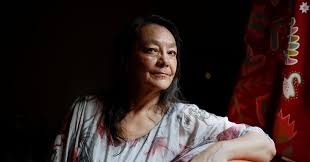
For this blog, I decided to post lots of pictures of 1st Nations actors, because I think these faces should be better known. Most of these performers I found on a list of "Hot 1st Nations Actors" --and so they are. There is one exception-- the magically expressive face of Tantoo Cardinal is widely recognized. I added her to my selection not only because I love her work, but because she'd made the perfect Elder/Shamen if my story ever received a movie adaptation. 


Tantoo Cardinal
   (Grandmother Drybones)

                                                       Eugene Brave Rock

or


The powerful face of Duane Howard from The Revenant.
Either of these might play Sascho's Uncle John, his teacher


~~~


Predictably, things haven't changed all that much for these actors over the last fifty years. 1st Nations People recently walked off the set of a Netflix movie during production. They'd had it with this particular film and with the over-the-top stereotypical stereotyping (yes, I meant that) even if the movie in question was intended to be an "equal opportunity offender." It was a line in the sand time for these actors, leaving me wondering when we're all going to grow up sufficiently to stop thinking making fun of ethnicity or race is acceptable.


Forest Goodluck
(Hawk/The Revenant) 


I know very little about 1st Nations actors and actresses, mostly because there aren't a lot of jobs for them in their chosen field. As I don't live in a city where indie or small budget movies can be often seen, it's difficult to view their performances. I have no doubt that the 1st Nations is a deep pool of talent. After all, people all over the world have stories they've been telling to one another for thousands of years, so art is no stranger to anyone. I'd enjoy seeing 1st Nations performers at work more often, and I'd like to see them playing meaty, genuine roles. (The modeling industry appears to be one place where their style and looks find a welcome.) 

Tanaya Beatty, Shannon Baker, Amber Midthunder, Roseanne Supernault and Eric Senseimer are below--left to right.


I mean, wow. Amazing faces representing many 1st Nations!


Most of these actors and actresses could not be cast as leads of Fly Away Snowgoose, because the characters are young teens: Yaotl Snowgoose and her sweetheart, Sascho Lynx. Perhaps:


                                                       Tristen Marty-Pahtaykan

                                                             Sascho Lynx


  Or, what about a younger version of Devery Jacobs (above) or Melow Nakehk'o (below)                      as Yaotl Snowgoose? Anything's possible, while we're imagining.


The two vulnerable preteens who end up attempting the journey home, Kele and Tanis Stonypoint, are even younger.


Sladen Peltier
(Kele's initial self-assurance)

Those parts should be filled by brand new, just-discovered young 1st Nations actors. How exciting it would be to see such a casting call, and to observe all the talented, charismatic kids who would audition.

~~Juliet Waldron
    
http://www.julietwaldron.com
See all my historical novels @

https://www.facebook.com/jwhistfic/?ref=aymt_homepage_panel

Also available at Smashwords, Kobo, B&N...